
Legacy Turns to Livability at Woodbine
A defining landmark becomes part of a complete community.
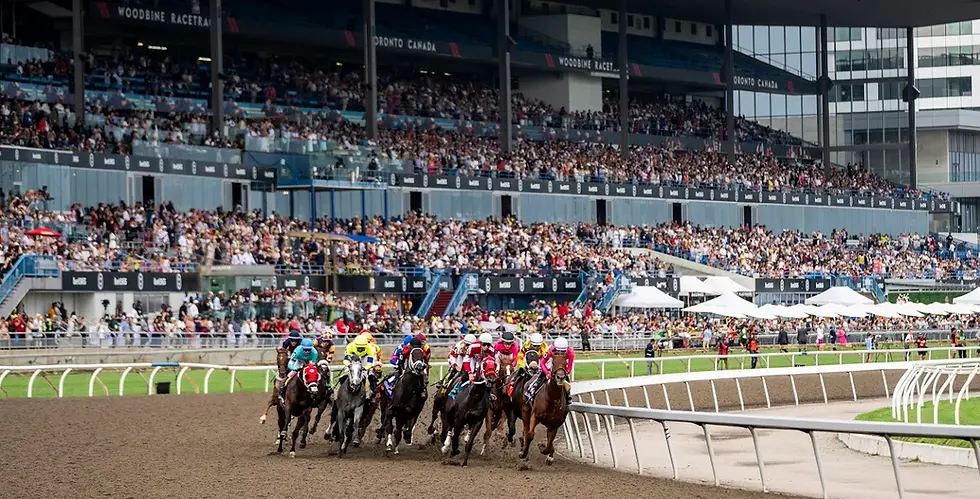
For nearly 70 years, Woodbine has been a Toronto destination. Today, this celebrated site is evolving into one of the city’s most ambitious and large-scale development initiatives—while keeping horse racing operations firmly in place.
Responsive Density:
Mid-Rise
at Scale
Creating thoughtfully planned and integrated urban neighbourhoods.
The plans introduce a diverse mix of uses across the development lands, including new residential communities. Low-to-mid-rise buildings are envisioned with heights generally reaching up to 16 storeys. The remainder of the Woodbine Lands will continue to support ongoing racing, entertainment and operational uses.


Balancing openness, connection and long-term adaptability.
Parks and public squares are integrated throughout to connect people with nature, while a rational and legible network of streets supports both movement and daily life.
A mix of buildings and spaces adds richness and variety, activating the public realm with shops and gathering spaces. Designed to evolve over time, the framework allows for flexibility as needs change, with each phase delivered as a complete and livable place.
Five Connected Neighbourhoods
Five distinct neighbourhoods are shaped by parks, connected streets and a flexible urban framework. Open green spaces balance built form and nature, while streets serve movement and daily life, supporting local activity and strong connections—including to the future Woodbine GO Station.

Discover the planned neighbourhoods through the gallery below.


A Place of its Place
Rooted in Woodbine's unique context, the community establishes a distinct identity while connecting into Toronto and the wider region.


Starting with the Southeast Quadrant
At approximately 190 acres, the City-led Secondary Plan study includes the Southlands and Woodbine Social neighbourhoods.
The Woodbine Secondary Plan Study will establish a planning policy framework to permit transit-oriented development surrounding the Woodbine GO Station.


These two neighbourhoods will be anchored by a new station and shaped by a connected network of walkable streets and open spaces that support vibrant, year-round daily life.
Existing training and stabling facilities will be thoughtfully relocated and modernized, ensuring Woodbine continues to deliver world-class racing operations alongside a new community development.
The Team





Project Milestones
Secondary Plan & Transportation Master Plan – in Progress
The City of Toronto is undertaking the Woodbine Secondary Plan Study to establish a vision and comprehensive planning framework for the study area. This work will form the foundation to inform the Secondary Plan, Urban Design Guidelines and related planning tools, developed by the City in collaboration with Woodbine Entertainment Group.
A Transportation Master Plan (TMP) is also being undertaken by Woodbine Entertainment Group and the City to inform the Secondary Plan Study and related policy development. The TMP will identify transportation programs, policies and new and modified multi-modal mobility infrastructure that will support new development within the Secondary Plan Study Area in the context of other existing, planned and potential development on the Woodbine Lands and broader City-wide travel needs.
Woodbine GO Announced – June 2025
Following a partnership between Woodbine Entertainment Group and Metrolinx, construction started in June 2025 for a major regional transit hub on the Kitchener Line set to connect UP express, Pearson Airport and local transit. To read the announcement, please visit the Metrolinx website.
Official Plan Amendment – Approved in 2025
Following the Toronto-Ontario New Deal, the Ministry of Municipal Affairs and Housing approved an Official Plan Amendment converting Core Employment Areas in the southeast quadrant of the Woodbine lands to Mixed-Use and Regeneration Areas, and added a Site and Area Specific Policy.
